June 13, 2026
The World Muslim Population Spatial and Temporal Analyses, 2nd Edition
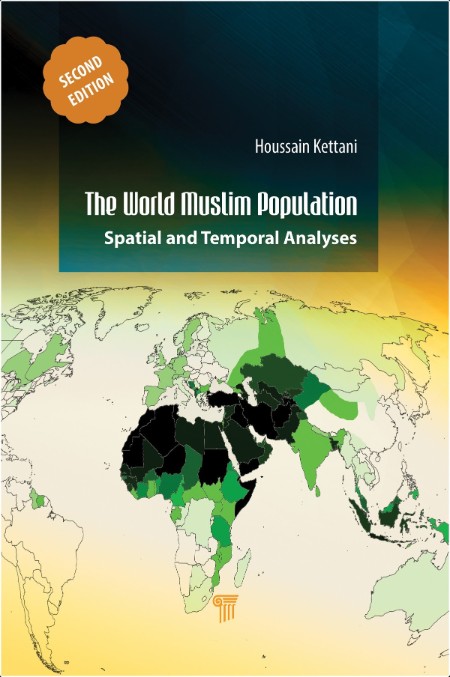
The World Muslim Population Spatial and Temporal Analyses, 2nd Edition | 138.66 MB
Title: The World Muslim Population Spatial and Temporal Analyses, 2nd Edition
Author: Houssain Kettani
Category: Nonfiction, Science & Nature, Mathematics, Reference, Religion & Spirituality, Christianity, Denominations, Monasticism, History
Language: English | 1010 Pages | ISBN: 9780429749254
Description:
The birth of Islam in the 7th century was a transformative event with a lasting global impact. This book provides a comprehensive estimate of the world Muslim population from the inception of Islam to the end of the 21st century. The world is organized into continents, regions, and present-day countries, with centennial estimates from 600 to 2100 and decennial data from 1790 onward. For each unit, total population, Muslim population, and corresponding percentages are presented. The data show a steady rise in the global Muslim share: from about 3% in 700 to 16% by 1700, followed by fluctuations around the 18th and 19th centuries. Since 1950, the proportion has grown consistently, reaching 26% in 2020. Growth is expected to slow, with projections of 32% by 2050 and 40% by 2100. The book serves as a reference for studies involving Muslim populations, including economics, migration, policy, and social development. The birth of Islam over 14 centuries ago was a monumental event in human history with an everlasting effect on humanity. This book presents a reliable estimate of the world Muslim population since the inception of Islam at the start of the 7th century to the end of the 21st century.
The birth of Islam in the 7th century was a transformative event with a lasting global impact. This book provides a comprehensive estimate of the world Muslim population from the inception of Islam to the end of the 21st century. The world is organized into continents, regions, and present-day countries, with centennial estimates from 600 to 2100 and decennial data from 1790 onward. For each unit, total population, Muslim population, and corresponding percentages are presented. The data show a steady rise in the global Muslim share: from about 3% in 700 to 16% by 1700, followed by fluctuations around the 18th and 19th centuries. Since 1950, the proportion has grown consistently, reaching 26% in 2020. Growth is expected to slow, with projections of 32% by 2050 and 40% by 2100. The book serves as a reference for studies involving Muslim populations, including economics, migration, policy, and social development. The birth of Islam over 14 centuries ago was a monumental event in human history with an everlasting effect on humanity. This book presents a reliable estimate of the world Muslim population since the inception of Islam at the start of the 7th century to the end of the 21st century.
DOWNLOAD:
https://nitroflare.com/view/F2B9273407D0C08/The_World_Muslim_Population_Second_Edition.rar

Zoology – Understanding the Animal World (The Great Courses)
Gu P Adaptable Design Methods and Applications 2023