May 16, 2026
The Future of Slow Mobility A Review on Design, Planning and Ethical Aspects of E – Bikes
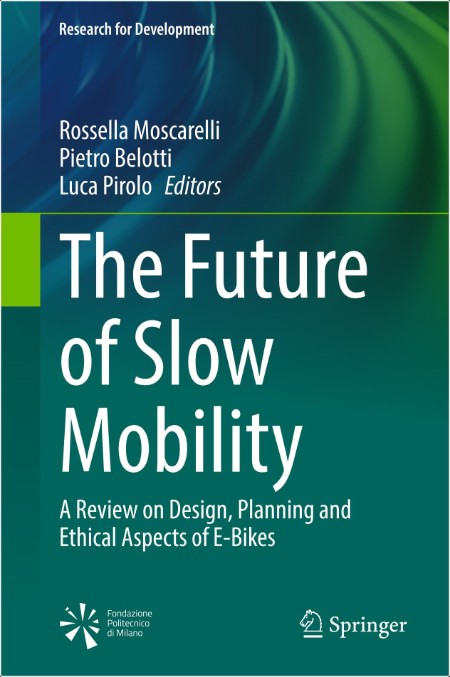
The Future of Slow Mobility A Review on Design, Planning and Ethical Aspects of E – Bikes | 8.51 MB
Title: The Future of Slow Mobility
Author: Rossella Moscarelli · Pietro Belotti · Luca Pirolo
Category: Nonfiction, Science & Nature, Technology, Engineering, Civil, Science, Biological Sciences, Environmental Science, Social & Cultural Studies, Social Science
Language: English | 221 Pages | ISBN: 9783032236609
Description:
This book explores the potentiality and criticality of integrating Electric Vehicle Supply Equipment (EVSE) technologies and slow mobility. The book broadly considers the so-called e-velomobility and deals with practices, systems, and technologies of e-cycling. The advent of assisted pedaling bicycles, or e-bikes, which have a battery-powered electric motor to provide more pedaling power, has made this sustainable means of transportation even more enticing for both everyday commuters and tourists. The former can easily experiment with vehicles such as cargo bikes; the latter can ride for long hours and enjoy the countryside or even mountain trails without thorough training. In summary, e-velomobility can expand the user base, the types of vehicles, and the places where slow mobility is exercised. Such positive effects have recently been discussed, focusing especially on their technological improvements, e.g., the type of battery, the design of the bike, and the charging stations. The reflections in this volume aim to enrich this debate by considering how e-technologies can be integrated into the plan and design of a slow-mobility project both about the daily routines within an urban context as well as the tourist movements.
This book explores the potentiality and criticality of integrating Electric Vehicle Supply Equipment (EVSE) technologies and slow mobility. The book broadly considers the so-called e-velomobility and deals with practices, systems, and technologies of e-cycling. The advent of assisted pedaling bicycles, or e-bikes, which have a battery-powered electric motor to provide more pedaling power, has made this sustainable means of transportation even more enticing for both everyday commuters and tourists. The former can easily experiment with vehicles such as cargo bikes; the latter can ride for long hours and enjoy the countryside or even mountain trails without thorough training. In summary, e-velomobility can expand the user base, the types of vehicles, and the places where slow mobility is exercised. Such positive effects have recently been discussed, focusing especially on their technological improvements, e.g., the type of battery, the design of the bike, and the charging stations. The reflections in this volume aim to enrich this debate by considering how e-technologies can be integrated into the plan and design of a slow-mobility project both about the daily routines within an urban context as well as the tourist movements.
DOWNLOAD:

Direct and Inverse Problems with Applications
Building Resilience into Production Contemporary Challenges for the Future